
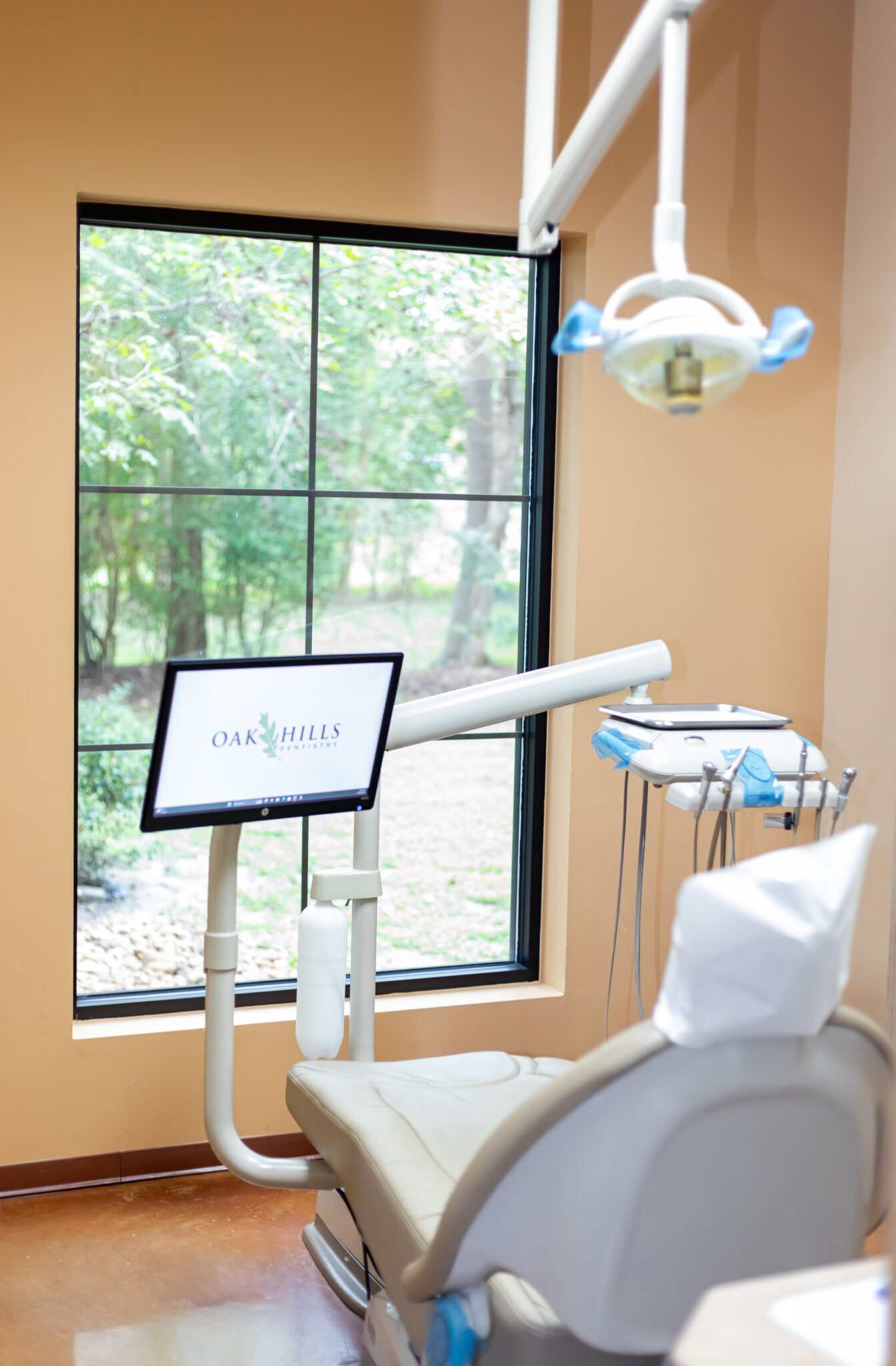
Exams and cleanings.
The visit that keeps every other visit small

The essentials
In short
A routine visit at Oak Hills Dentistry pairs a professional cleaning with a full exam: we remove plaque and hardened tartar, chart the gums, check every tooth and existing filling, take X-rays when they are due, and screen for signs of oral cancer. Most healthy adults come twice a year; if you have active gum disease or a history of decay, Dr. Patel may recommend more frequent visits.
What a checkup actually covers
A cleaning and an exam are two different things that happen in the same appointment. The cleaning is mechanical: plaque and calcified tartar come off the tooth surfaces and just under the gumline, where a toothbrush cannot reach. The exam is diagnostic. It is where problems get found while they are still cheap and painless to fix.
During the exam we look at:
- Every tooth surface, for new decay and for wear from grinding
- Every existing filling, crown and bridge, for leaking margins and cracks
- Gum pocket depths, recorded tooth by tooth, so change over time is visible
- Your bite and jaw joints, for the signs that lead to cracked teeth and TMJ pain
- The soft tissue of your lips, tongue, palate and throat, for anything that should not be there
Why the interval matters more than the cleaning
Decay and gum disease are slow. Caught at six months, a soft spot is a small filling and a deep pocket is a change in technique. Caught at four years, the same two problems are a crown and a course of periodontal treatment. The value of a routine visit is almost entirely in the timing.
What to expect
Plan on about an hour. You will not be numbed for a routine cleaning. If you gag easily, tell us before the X-rays. There are smaller sensors and different angles that make it manageable.
Aftercare
Your gums may feel slightly tender for a day if there was a lot of build-up, and cold may register more sharply for a few days after a deep clean. Warm salt-water rinses help. Anything that lasts beyond a week is worth a phone call.
What affects the cost
Insurance plans usually treat two cleanings and one exam a year as preventive care, often at a higher coverage level than restorative work. Deep cleaning for active gum disease is billed differently from a routine cleaning because it is a different procedure. We will tell you which one you need, and what your plan is likely to do with it, before we start.
Talk it through first
Nothing here replaces an examination. If you are weighing this up, the useful next step is a conversation. Bring your questions, bring what you have been told elsewhere, and ask what the alternatives cost over ten years rather than this month.
Oak Hills Dentistry is on Louetta Road in Spring, Texas, and also sees patients from The Woodlands and north Houston. Request an appointment or call 281-350-8852.
Written for patients of Oak Hills Dentistry in Spring, Texas. General dental education, not a diagnosis or a treatment plan for any individual. Updated August 2026.
The path
How it goes, step by step.
A meticulous sequence, explained before it starts. You should never be surprised by the next appointment.
Step 1: Review and photographs
We ask what has changed since your last visit, then take the X-rays and photos that are actually due, not a full set every time.
Step 2: Charting and cleaning
Your hygienist measures the gum pockets, records what she finds, then removes plaque and tartar above and just below the gumline.
Step 3: The exam
Dr. Patel checks each tooth and restoration, your bite, your jaw joints and the soft tissue, and screens for oral cancer.
Step 4: Plain-language plan
You leave knowing what is healthy, what is being watched, what needs doing now, and what can reasonably wait.
The practice
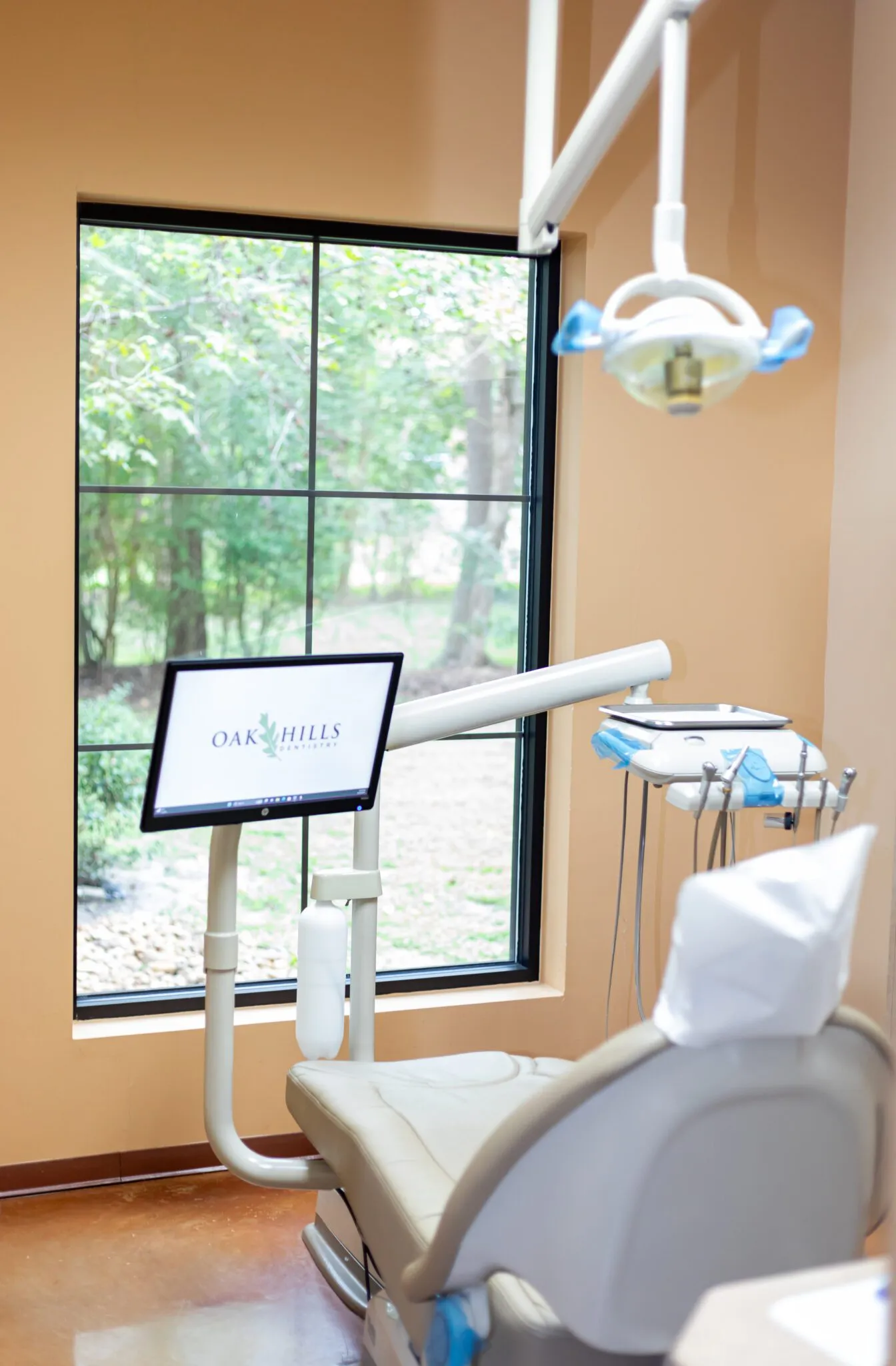
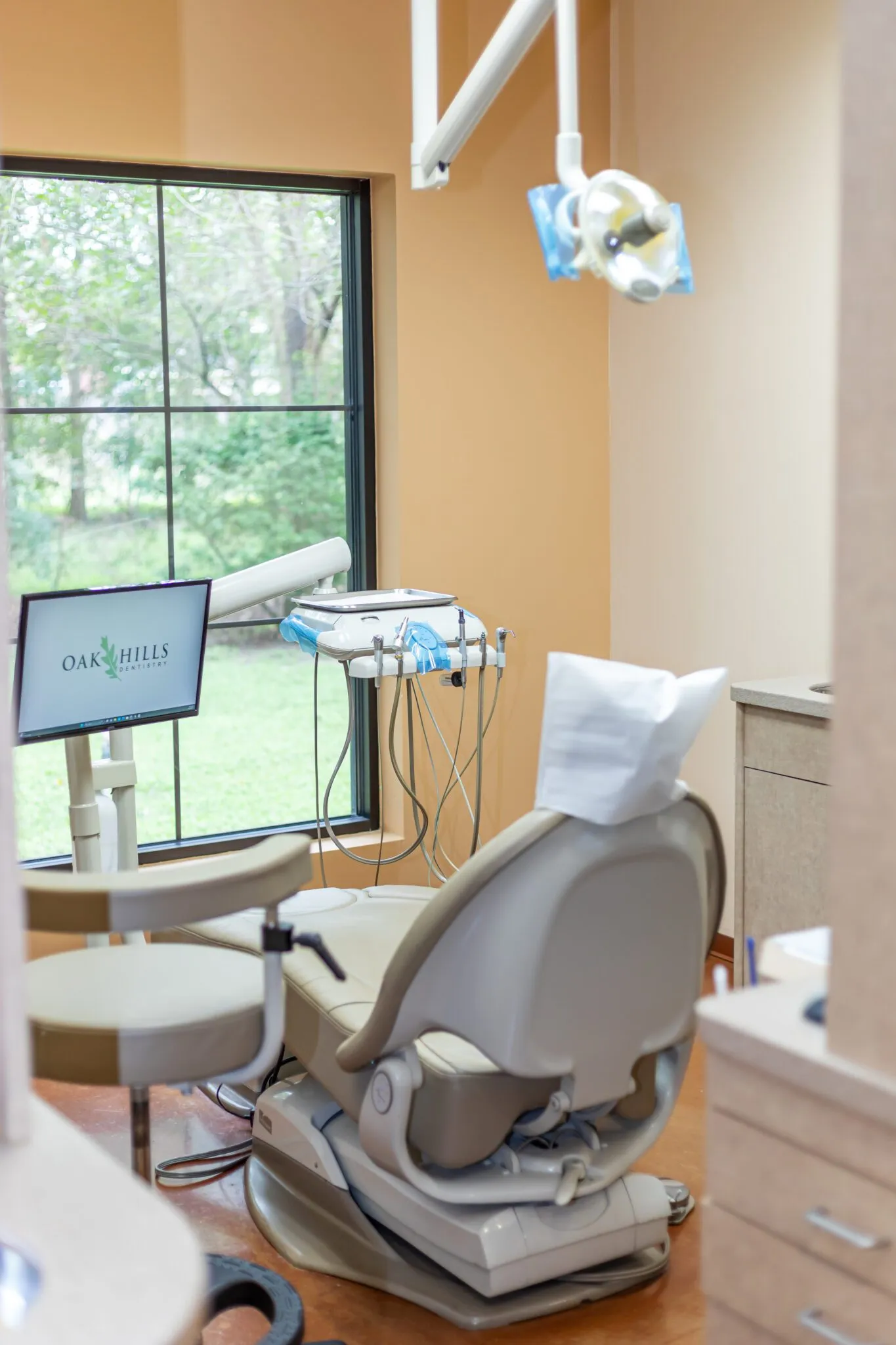
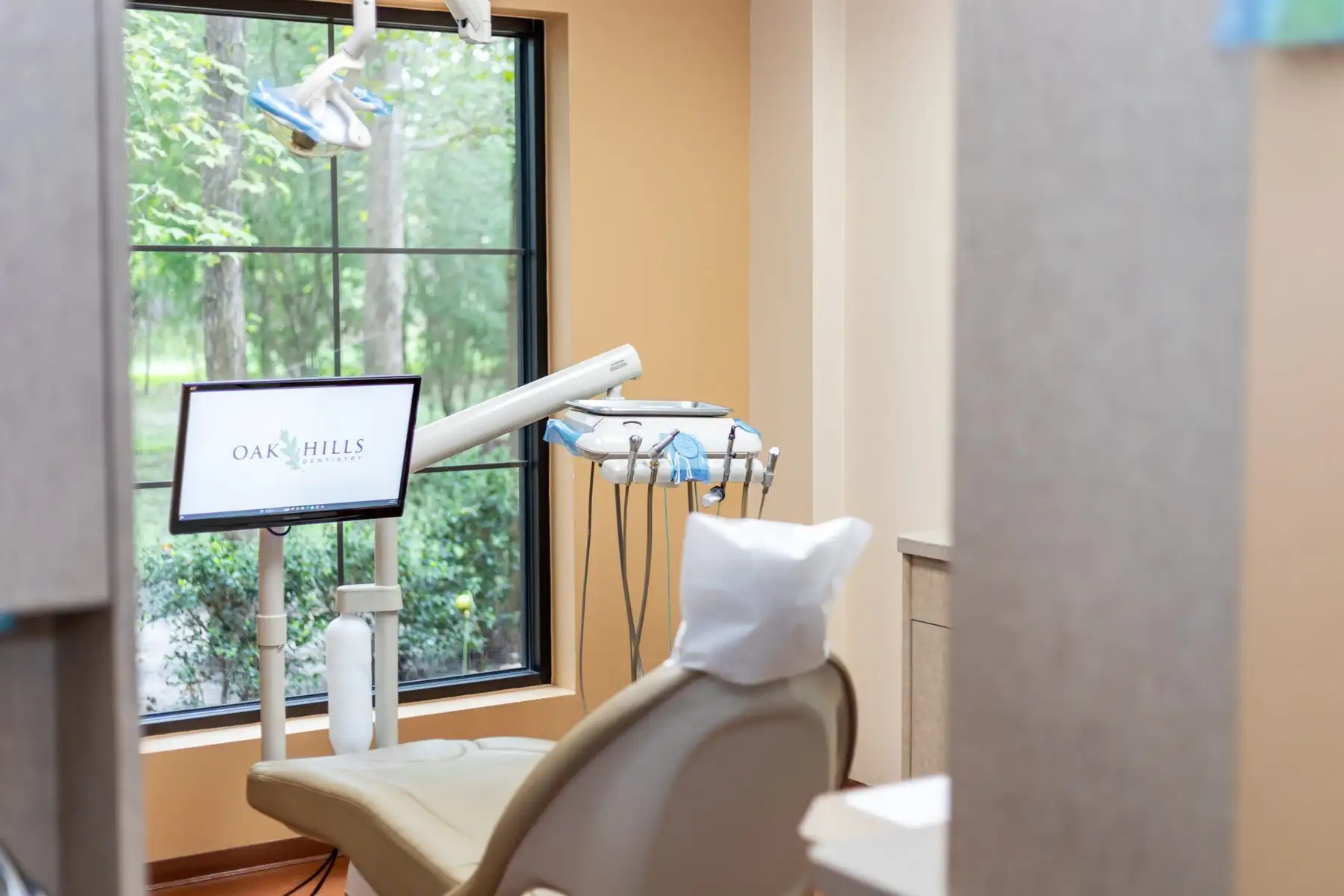
Where the work happens.
FAQ
Know before you visit.
Answers to your most common questions.
Twice a year suits most people. If you have gum disease, deep pockets, dry mouth, diabetes or a history of frequent decay, three or four visits a year keeps things stable. Dr. Patel will explain why if he recommends it for you.
No. X-rays are taken on an interval based on your risk, not on a schedule. Bitewing images that check between teeth are the most common; a full panoramic image is taken far less often, usually when planning treatment.
A routine cleaning is not usually uncomfortable. If your gums are inflamed or your roots are sensitive, tell your hygienist. Topical numbing gel is available, and we can work in shorter passes.
That is common and it is not a problem. We start with the exam, get you comfortable, and stage the cleaning over more than one appointment if there is a lot of build-up. No lectures.
Start your smile journey.
Tell us how to reach you and we will call to talk through dental exams & cleanings, no commitment.