
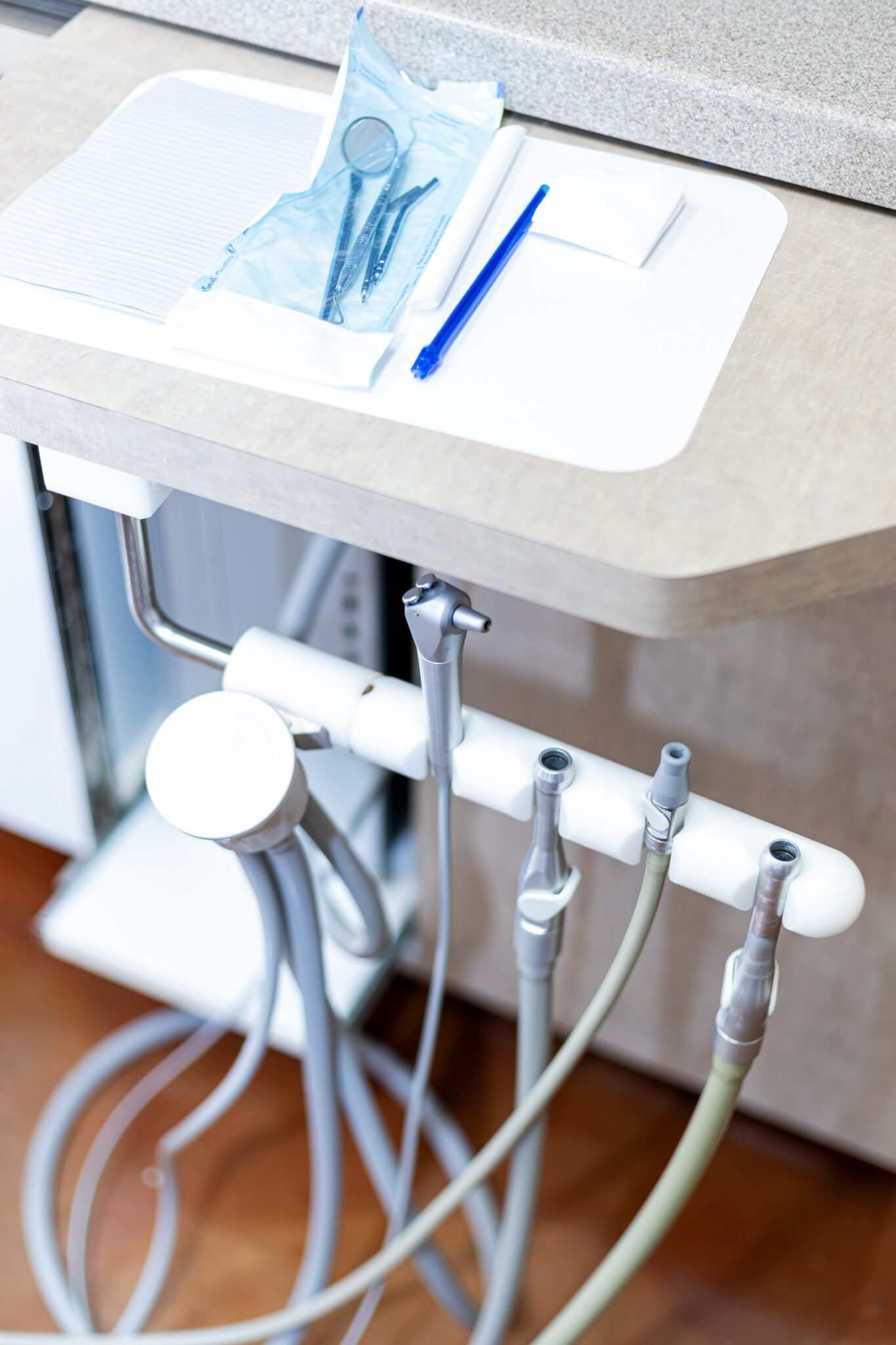
Snap-on dentures.
A denture that stays where you put it
The essentials
In short
An implant-supported overdenture is a removable denture that clips onto two or more dental implants rather than resting on the gum. It stops the sliding, rocking and adhesive dependence of a conventional lower denture, while remaining removable for cleaning. It costs considerably less than a fixed full-arch bridge and is the single biggest quality-of-life improvement available to most long-term lower denture wearers.
The problem it solves
A lower denture has almost nothing to hold onto. There is no palate to seal against, the tongue lifts it, the cheeks move it, and as the ridge flattens over years it gets steadily worse. People stop eating certain foods, avoid eating in company, and rely on adhesive that has to be reapplied through the day.
Two implants change that completely. The denture clicks down and stays down.
What treatment involves
Assessment. Imaging to check bone volume at the planned implant sites, and an evaluation of your existing denture and bite.
Placement. Implants are placed, usually in the front of the lower jaw where bone is densest. Most cases are straightforward and done under local anesthetic, with sedation available.
Integration. Three to six months for bone to fuse. Your existing denture is usually adjusted to sit clear of the healing sites so you are not without teeth.
Attachment. The connectors are fitted to the implants and the corresponding housings placed in the denture, either chairside or by the laboratory. The denture then snaps into place.
What it feels like
Most patients describe eating with confidence again as the change that matters: biting into things they had given up on. Speech usually improves too, because the denture is no longer shifting. It is still a denture: it covers the palate on an upper, and it comes out. But it stays put.
Cleaning
Out at night, brushed with a denture brush and non-abrasive cleaner, soaked as directed. The implant attachments in your mouth get brushed like teeth, and the housings inside the denture need attention because debris collects there. We will show you exactly where, and check it at your maintenance visits.
Alternatives
A conventional denture if implants are not possible or affordable. Full-arch fixed treatment if you want teeth that never come out and can invest more. Individual implants and crowns if you still have several sound teeth and only need specific gaps restored.
What affects the cost
The number of implants, whether grafting is needed, whether your existing denture can be adapted or a new one is required, and the attachment system used. This is meaningfully less than fixed full-arch treatment. Insurance sometimes contributes towards the denture portion while excluding the implants; we will get that in writing before you commit.
Talk it through first
Nothing here replaces an examination. If you are weighing this up, the useful next step is a conversation. Bring your questions, bring what you have been told elsewhere, and ask what the alternatives cost over ten years rather than this month.
Oak Hills Dentistry is on Louetta Road in Spring, Texas, and also sees patients from The Woodlands and north Houston. Request an appointment or call 281-350-8852.
Written for patients of Oak Hills Dentistry in Spring, Texas. General dental education, not a diagnosis or a treatment plan for any individual. Updated August 2026. This page covers a higher-risk treatment area and is queued for clinical sign-off by Dr. Neal H. Patel before launch.
The practice
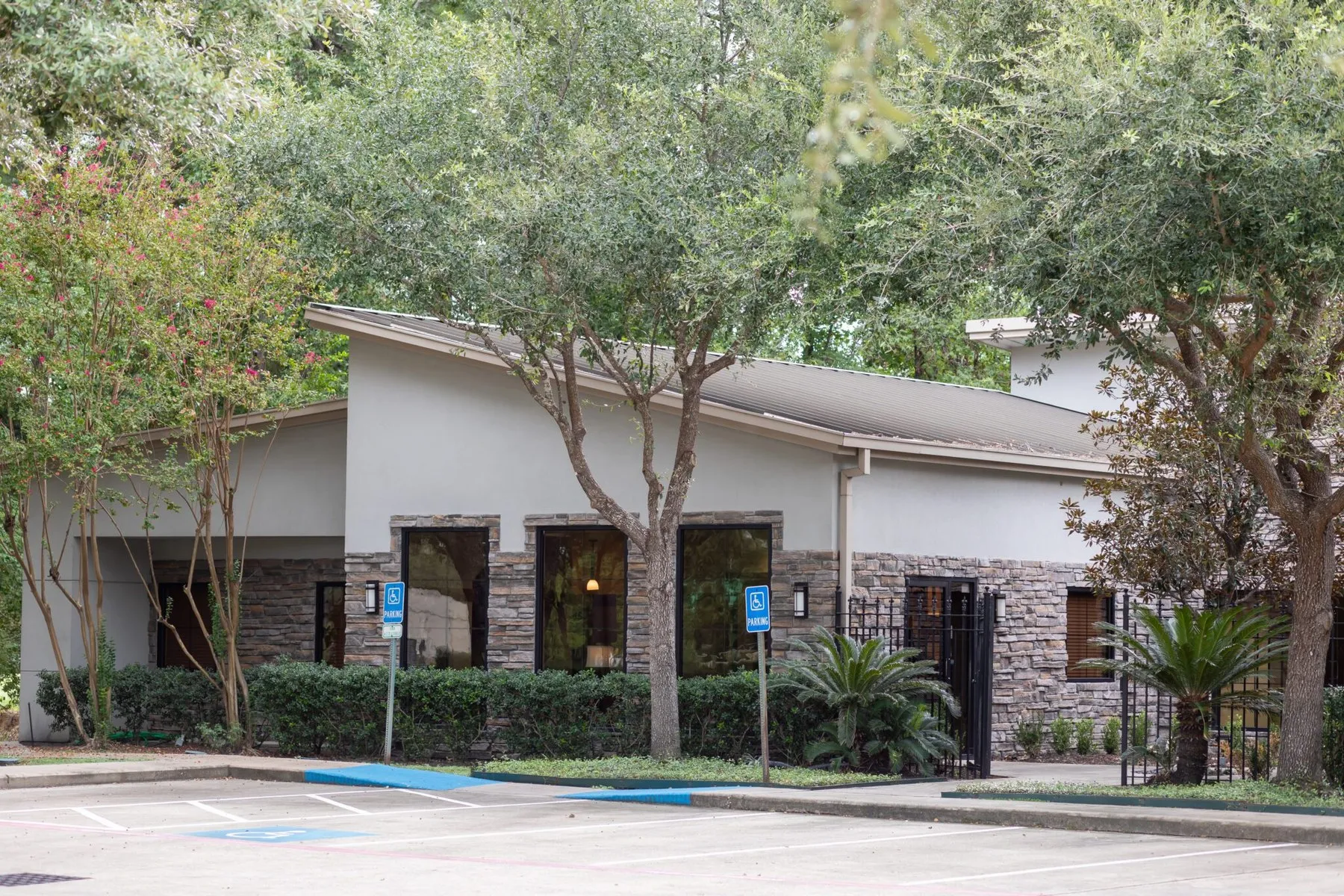
Where the work happens.
FAQ
Know before you visit.
Answers to your most common questions.
Two is the common minimum for a lower overdenture and makes a dramatic difference. Four gives more stability and better load distribution, particularly in the upper jaw, where bone is softer and a two-implant overdenture is less predictable.
Sometimes. If your current denture fits reasonably and the teeth are in good condition, it can often be modified to take the attachments. If it is worn, ill-fitting or the bite is wrong, a new denture made for the implants is the better result.
Yes, and it should. Removing it lets the gum tissue recover and lets you clean both the denture and around the implant attachments properly. That is a genuine advantage over a fixed bridge for many patients: the cleaning is straightforward.
An overdenture snaps on and off and is supported partly by the gum; a full-arch bridge is fixed permanently and supported entirely by the implants. The bridge chews better and feels closer to natural teeth; the overdenture costs much less and is simpler to keep clean. Neither is universally better.
Yes. The nylon or rubber inserts that grip the attachments are consumable parts and are replaced periodically, commonly every one to two years depending on use. It is a quick, inexpensive appointment, and it is worth budgeting for.
It slows the loss substantially in the area around the implants, because those implants keep loading the bone. A conventional denture presses on bone that has nothing holding it and accelerates the shrinkage, which is why dentures need relining and remaking over time.
Start your smile journey.
Tell us how to reach you and we will call to talk through implant-supported dentures, no commitment.