
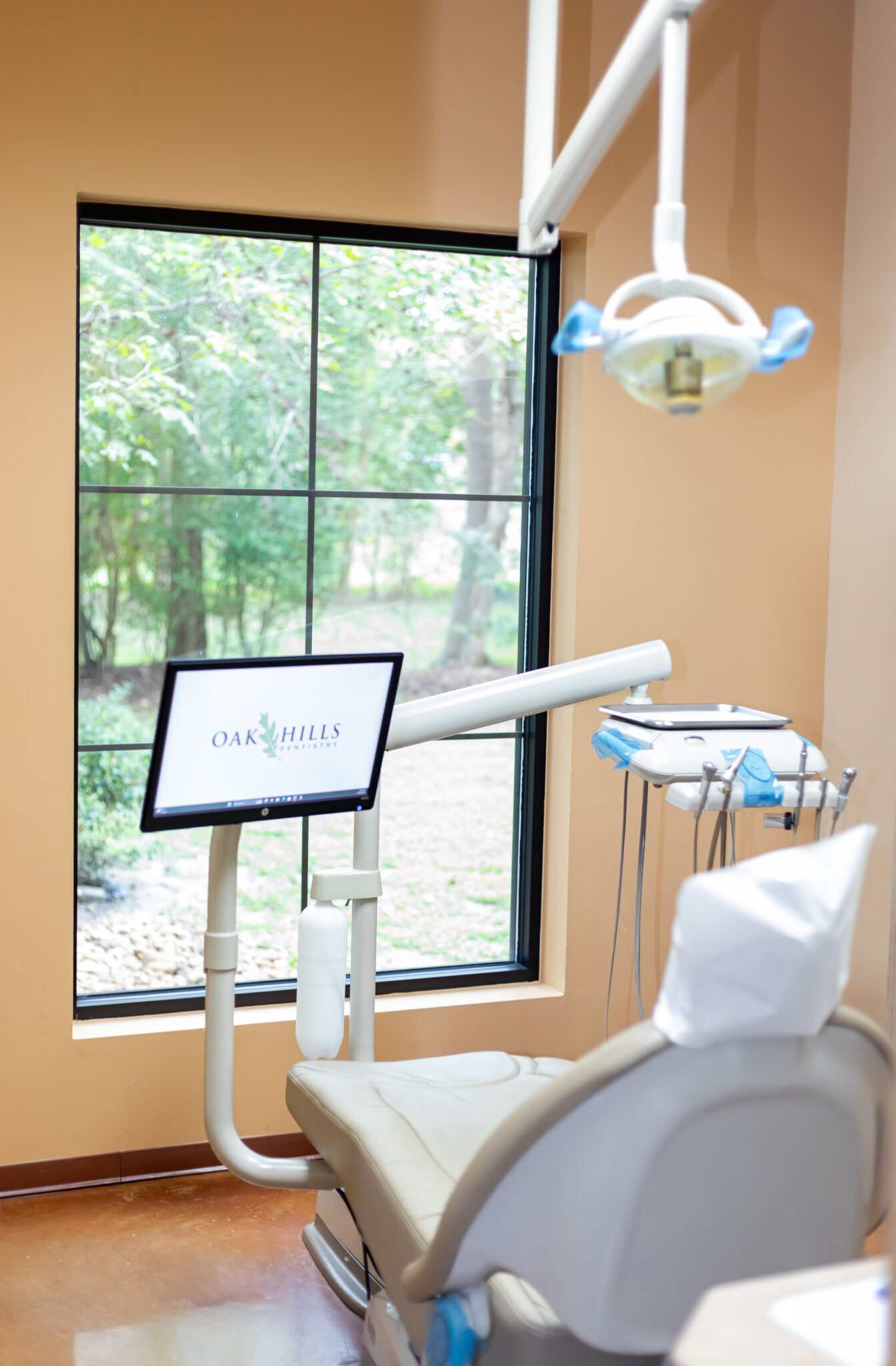
Tooth extraction.
Done gently, and planned around what comes next

The essentials
In short
A tooth is extracted when it cannot be predictably restored: severe decay, a fracture running below the gum, advanced bone loss, or infection that has destroyed the supporting structure. Simple extractions are done under local anesthetic in a single visit; surgical extractions involve sectioning the tooth or reflecting a small amount of gum. Where an implant or bridge is planned, bone grafting the socket at the time of extraction preserves the ridge and makes the replacement more straightforward.
When a tooth cannot be saved
Dentistry is generally biased towards keeping teeth, and so are we. Extraction becomes the better option when:
- Decay has destroyed so much structure that nothing is left to hold a restoration
- A fracture runs vertically below the gumline
- Periodontal bone loss has left the tooth mobile with little support remaining
- Infection has not resolved after root canal treatment and retreatment is not viable
- A tooth is in the way of orthodontic or prosthetic treatment that matters more
Simple and surgical
A simple extraction loosens the tooth in its socket and removes it whole. Local anesthetic, usually straightforward, often quicker than the appointment to plan it.
A surgical extraction is needed when the tooth is broken at the gumline, has curved or fused roots, or sits partly under bone. Dr. Patel may section a multi-rooted tooth to remove it in pieces, which is gentler on the surrounding bone than forcing it out whole, and may reflect a small amount of gum to see what he is doing. Sutures may be placed.
Planning the replacement first
The most useful conversation happens before the tooth comes out, not after. If the plan is an implant, this visit is when the socket can be grafted to hold its shape. If it is a bridge, the neighboring teeth need assessing. If nothing is going in, we should both be clear about what the space will do over the next few years.
Aftercare that actually matters
- Bite firmly on the gauze for a solid thirty to sixty minutes; replace it if it soaks through
- No smoking, no straws, no vigorous rinsing or spitting for at least seventy-two hours. This is what protects the clot
- Ice on and off for the first day, then warm salt-water rinses from day two
- Soft food, nothing sharp or hot on the site, and stay well hydrated
- Take the anti-inflammatory before the anesthetic fully wears off rather than after
- Keep brushing the rest of your mouth normally
Call us if bleeding is still heavy after a few hours, if swelling is increasing after day two, if pain spikes around day three, or if you develop a fever.
What affects the cost
Simple and surgical extractions are billed differently, and a socket graft is a separate procedure with its own material cost. Most plans cover extractions at a mid-tier percentage; graft coverage is less consistent. We will price the extraction and the replacement path together, because deciding one without the other is how people end up spending more.
Talk it through first
Nothing here replaces an examination. If you are weighing this up, the useful next step is a conversation. Bring your questions, bring what you have been told elsewhere, and ask what the alternatives cost over ten years rather than this month.
Oak Hills Dentistry is on Louetta Road in Spring, Texas, and also sees patients from The Woodlands and north Houston. Request an appointment or call 281-350-8852.
Written for patients of Oak Hills Dentistry in Spring, Texas. General dental education, not a diagnosis or a treatment plan for any individual. Updated August 2026. This page covers a higher-risk treatment area and is queued for clinical sign-off by Dr. Neal H. Patel before launch.
The practice
Where the work happens.


FAQ
Know before you visit.
Answers to your most common questions.
You should feel pressure, not pain. The anesthetic handles the tooth and surrounding bone; the pressure comes from the tooth being eased out of the socket, and it is a strange sensation rather than a painful one. Nitrous oxide or oral sedation is available if the idea of it is the problem.
Most of the discomfort is in the first two to three days and then improves steadily. Soft tissue closes over the socket within a couple of weeks; the bone underneath continues filling in for several months. Surgical extractions and lower molars generally take longer than simple ones.
It is what happens when the blood clot protecting the socket is lost early, exposing bone. The pain is distinctive. It starts around day three, is deep and radiating, and does not respond well to ordinary painkillers. Smoking and drinking through a straw are the classic causes. It is treatable, so call us rather than waiting it out.
If you intend to place an implant there, usually yes. An ungrafted socket loses a meaningful proportion of its width and height in the first six months, and rebuilding that later is more involved than preserving it now. If the space will be left or restored with a removable option, grafting may not be necessary. Dr. Patel will tell you which case yours is.
You can, and for a single back tooth with good opposing contact it is sometimes reasonable. But teeth drift into spaces and the opposing tooth over-erupts, which can change the bite and make later restoration harder. We would rather discuss the trade-off honestly than assume either way.
Start your smile journey.
Tell us how to reach you and we will call to talk through tooth extractions, no commitment.