
Teeth whitening.
Several shades, without the sensitivity horror stories
The essentials
In short
Oak Hills Dentistry offers Zoom in-office whitening, which lightens teeth in a single appointment, and custom-fitted take-home trays for gradual whitening and top-ups. Both work by peroxide penetrating enamel and breaking down the pigment molecules inside. Whitening only lightens natural tooth structure. Existing crowns, veneers and fillings do not change color, which is why shade decisions come before restorative work, not after.
What actually whitens teeth
Hydrogen peroxide or carbamide peroxide diffuses through enamel into the dentine underneath and chemically breaks apart the large pigment molecules that have accumulated there over decades. Nothing is scraped off and nothing is bleached white; the existing color is lightened.
That is why whitening toothpaste is a different product entirely. Abrasives and polishing agents remove surface film, which helps a little, but nothing in a toothpaste tube penetrates enamel. Charcoal pastes are abrasive, and some of them are abrasive enough to be a genuinely bad idea long-term.
Before you whiten
Two things happen first: a checkup and a cleaning. Whitening over active decay or an exposed root is uncomfortable and sometimes harmful, and peroxide reaching a cavity through a leaking margin is exactly the sensitivity story people repeat for years. Whitening also works considerably better on a properly cleaned tooth.
If you are planning any front-tooth restorative or cosmetic work, whiten first. It is the cheapest step in the sequence and it sets the target shade for everything else.
In-office Zoom
Your gums and lips are isolated so the gel only touches teeth. The gel is applied in timed cycles across the appointment. You will leave several shades lighter in most cases, with the caveat that results vary with starting shade and stain type. Expect some sensitivity for the rest of the day, and avoid deeply staining food and drink for the first forty-eight hours while the enamel rehydrates.
Custom take-home trays
We scan your teeth and make trays that fit closely enough to hold gel against the tooth and off the gum. You wear them for a set period each day for one to two weeks. It is slower, gentler, more controllable, and the trays are reusable indefinitely for top-ups, which over five years makes it the more economical route.
What affects the cost
In-office whitening is a single fee. Take-home trays involve a laboratory fee for the trays plus gel, and then only gel thereafter. Whitening is cosmetic and is not covered by dental insurance. The associated exam and cleaning usually are.
Talk it through first
Nothing here replaces an examination. If you are weighing this up, the useful next step is a conversation. Bring your questions, bring what you have been told elsewhere, and ask what the alternatives cost over ten years rather than this month.
Oak Hills Dentistry is on Louetta Road in Spring, Texas, and also sees patients from The Woodlands and north Houston. Request an appointment or call 281-350-8852.
Written for patients of Oak Hills Dentistry in Spring, Texas. General dental education, not a diagnosis or a treatment plan for any individual. Updated August 2026.
The practice
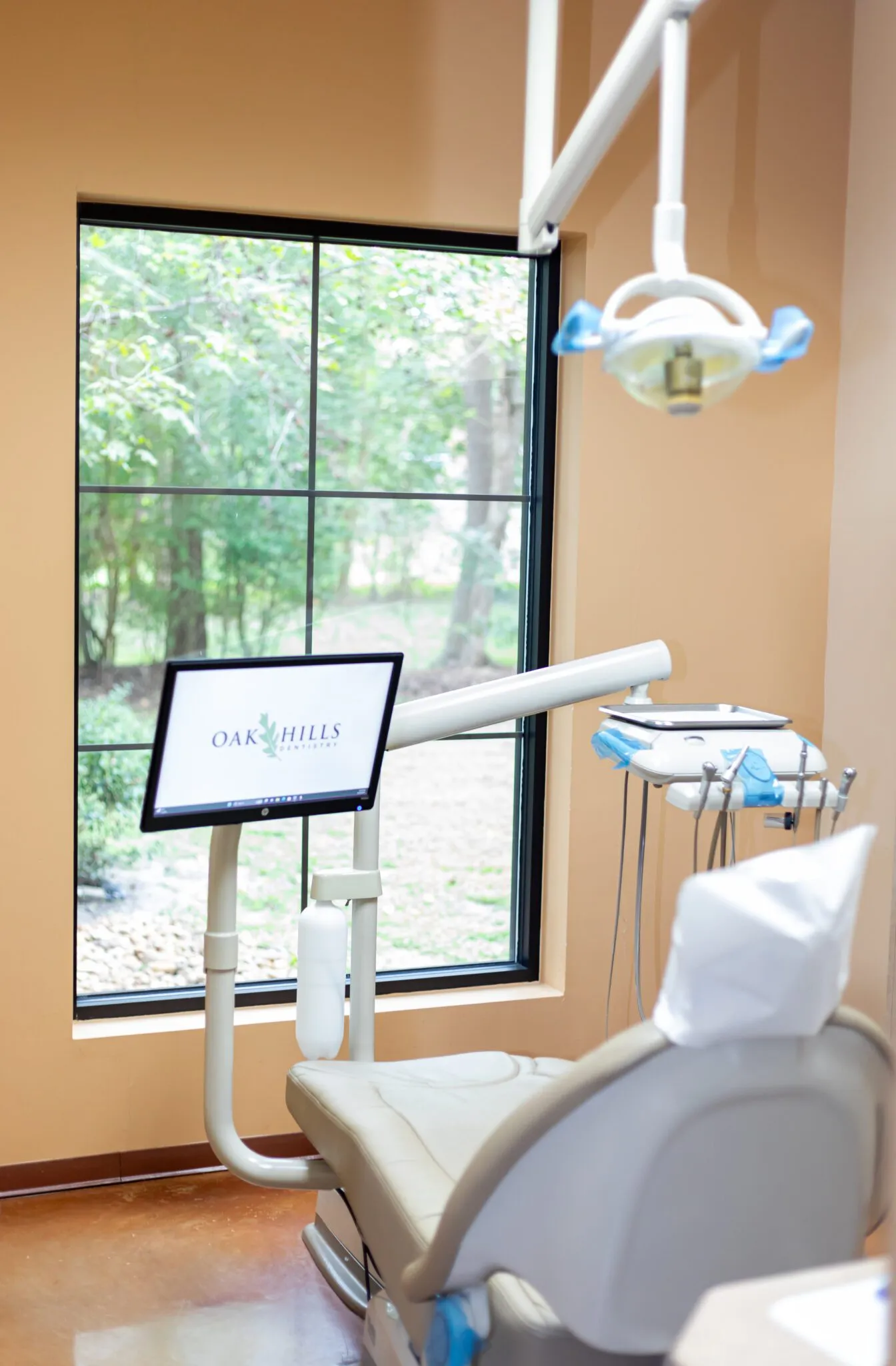
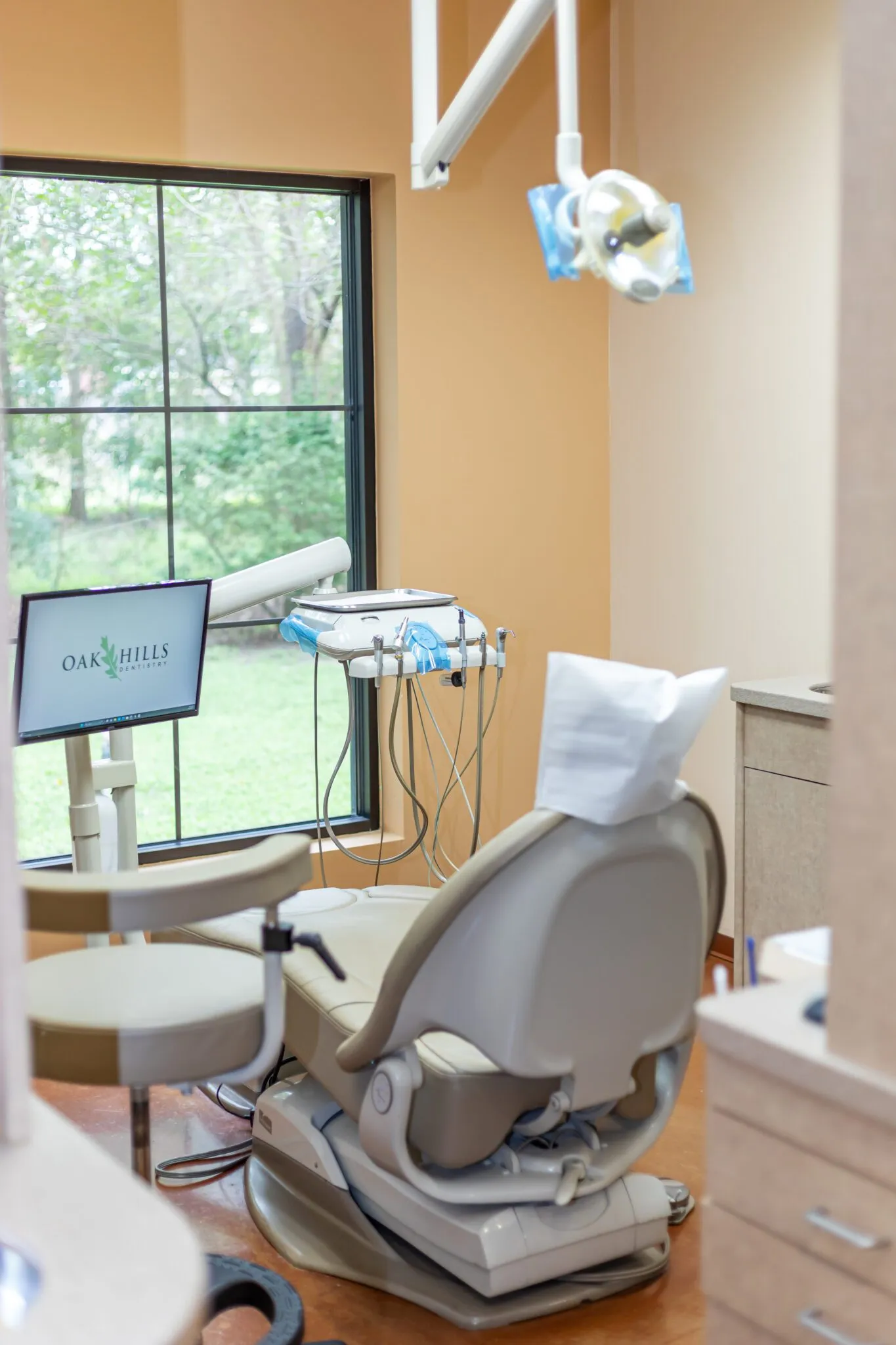
Where the work happens.
FAQ
Know before you visit.
Answers to your most common questions.
In-office is faster and useful for a deadline; take-home trays give more gradual, more controllable results and are far cheaper to top up. Many patients do an in-office session and then keep the trays for maintenance. If your enamel is sensitive, the slow take-home route with a lower concentration is usually kinder.
Because whitening only affects natural tooth structure. Porcelain and composite hold whatever shade they were made in. If you have front restorations and you want to whiten, whiten first, then replace those restorations to match the new shade.
Professionally supervised whitening at appropriate concentrations does not measurably weaken enamel. What it does cause is temporary sensitivity by opening the microscopic tubules in dentine, which settles within a day or two. Uncontrolled overuse of high-concentration product is a different matter, which is why we fit the trays rather than leaving you to it.
Use a high-fluoride or potassium-nitrate desensitising toothpaste for a week before starting, take an anti-inflammatory before an in-office session, shorten the wear time rather than skipping days, and leave a rest day between applications. Tell us if it is severe. We can drop the concentration.
Typically one to three years, depending heavily on coffee, tea, red wine, smoking and how often you top up. Two nights of tray wear every few months maintains it easily once the trays exist.
No. Yellowing from age and surface staining respond well. Gray tetracycline banding, fluorosis mottling and a single dark tooth from old trauma respond poorly or unevenly. Those are veneer or internal-bleaching conversations.
Start your smile journey.
Tell us how to reach you and we will call to talk through teeth whitening, no commitment.