
Porcelain crowns.
Hold a damaged tooth together for the long run
The essentials
In short
A crown is a custom ceramic cap bonded over a whole tooth to hold it together and restore its shape. It is the right restoration when too little sound tooth remains for a filling: after a large fracture, a cracked cusp, a failed oversized filling, or root canal treatment on a back tooth. Modern all-ceramic crowns match natural enamel closely and, well made and well maintained, commonly last well over a decade.
Why capping beats filling on a broken tooth
A tooth is a hollow structure that resists force through its intact walls. Remove enough of those walls (through a large cavity, an old oversized filling, or a fracture) and what is left flexes each time you chew. Flex propagates cracks. Cracks that reach below the gumline usually end in extraction.
A crown replaces the failing outer structure with a rigid shell bonded around the whole tooth. It does not just fill a hole; it stops the flexing.
Materials
All-ceramic materials such as lithium disilicate and zirconia dominate modern crown work. They match enamel well, need no metal substructure and have no dark margin at the gumline. Zirconia is the strongest and is often chosen for molars and for heavy grinders; lithium disilicate is more translucent and generally preferred for front teeth. Gold remains technically excellent and is chosen occasionally by patients who value longevity over appearance.
Dr. Patel will explain which material he is specifying for your tooth and why.
The two appointments
Preparation. Numbing, removal of decay or the old restoration, and shaping the tooth to make room for the crown, a fraction of a millimeter to just over a millimeter, depending on material. A digital scan replaces the old putty impression. A temporary crown goes on.
Fitting. Two to three weeks later the temporary comes off and the final crown is tried in. We check the margin seals cleanly, the contacts with neighboring teeth let floss pass with slight resistance, and the bite lands evenly. Then it is bonded and polished.
Aftercare
Some sensitivity in the first weeks is normal. Floss the margin daily. That edge is where crowns fail. Avoid chewing ice and hard nuts on it, and wear a night guard if you grind. Keep attending exams so the margin is checked with the X-rays.
What affects the cost
Material and laboratory work drive the fee, and front teeth often cost more because they demand more from the ceramist. If a post and core is needed inside a root-canalled tooth, that is an additional procedure. Most dental plans cover crowns at a lower percentage than fillings, frequently around half, subject to an annual maximum, which a root canal plus a crown in the same year can exhaust. We will sequence treatment across benefit years where that helps you.
Talk it through first
Nothing here replaces an examination. If you are weighing this up, the useful next step is a conversation. Bring your questions, bring what you have been told elsewhere, and ask what the alternatives cost over ten years rather than this month.
Oak Hills Dentistry is on Louetta Road in Spring, Texas, and also sees patients from The Woodlands and north Houston. Request an appointment or call 281-350-8852.
Written for patients of Oak Hills Dentistry in Spring, Texas. General dental education, not a diagnosis or a treatment plan for any individual. Updated August 2026. This page covers a higher-risk treatment area and is queued for clinical sign-off by Dr. Neal H. Patel before launch.
The path
How it goes, step by step.
A meticulous sequence, explained before it starts. You should never be surprised by the next appointment.
Step 1: Assessment
X-rays, a look at the crack pattern and how much sound tooth is left, and a decision between an onlay, which keeps more tooth, and a full crown.
Step 2: Preparation and scan
The tooth is shaped, scanned digitally, and a temporary crown fitted while the laboratory builds the final one.
Step 3: Fit and adjust
The crown is tried in, the margin and contacts checked, your bite adjusted until it lands evenly, then it is bonded.
Step 4: Protection
If you grind, a night guard. The most common cause of a fractured crown is night-time clenching.
The practice
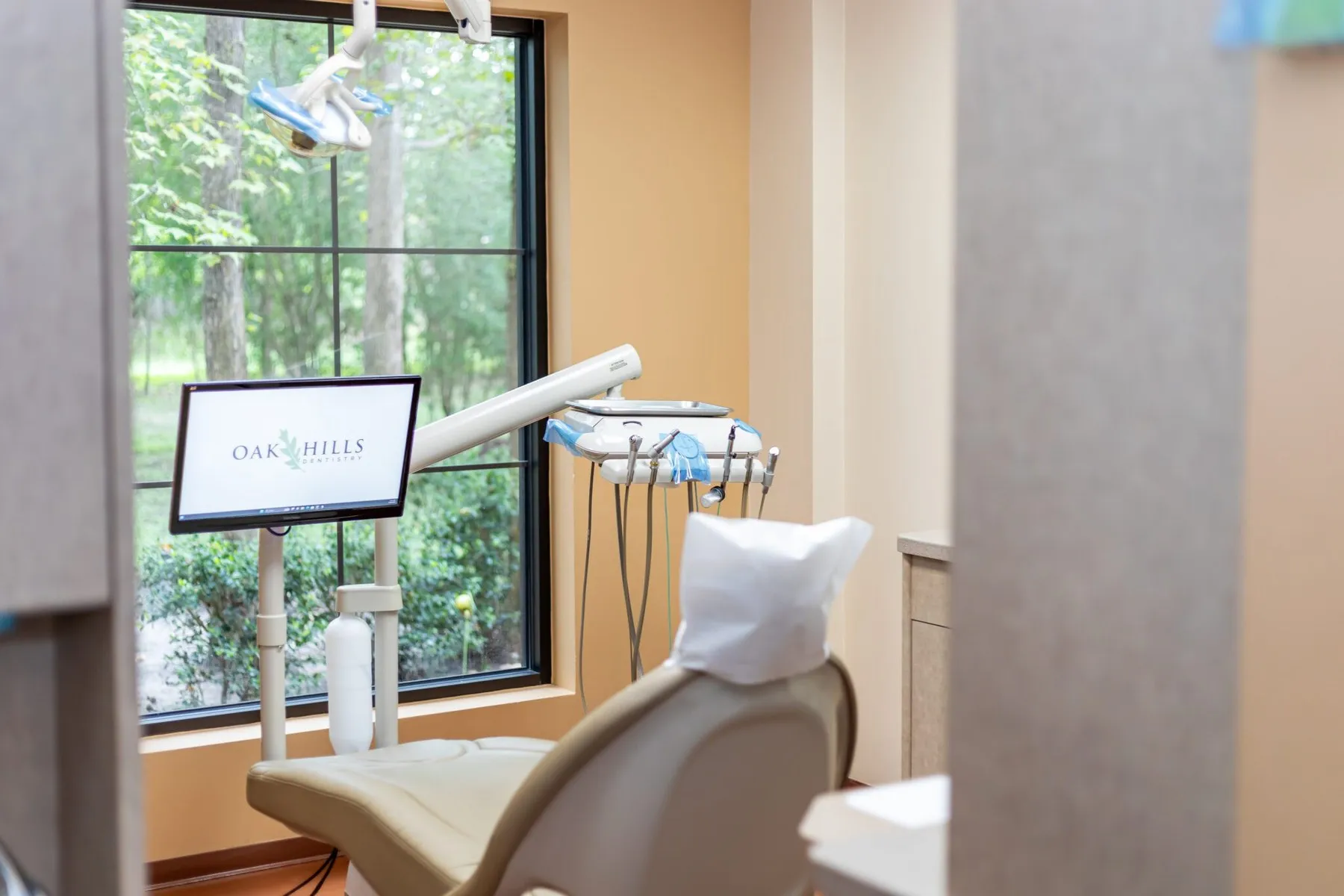
Where the work happens.

FAQ
Know before you visit.
Answers to your most common questions.
It comes down to how much sound tooth wall is left to support a restoration and whether there are cracks. Once a cavity or old filling spans most of the chewing surface, or a cusp is cracked, a filling has nothing to brace against and the tooth flexes. A crown or onlay wraps and holds it. Dr. Patel will show you on the photographs why he is recommending one over the other.
A partial crown. It covers the damaged cusps and chewing surface but leaves sound walls intact, so less tooth is removed. Where an onlay will do, it is the better restoration. More conservative, same protection.
Commonly ten to twenty years or more. Failure is usually decay at the margin (the crown itself does not decay, but the tooth under its edge can) or a fracture in the underlying tooth or root. Both are largely governed by hygiene and grinding.
A well-made all-ceramic crown on a front tooth can be extremely convincing. It depends on the ceramist, on adequate space to build translucency, and on the shade being taken before the tooth is dehydrated by a long appointment. Front teeth are harder than back teeth, and we plan them accordingly.
It is common and not an emergency, but call us. The prepared tooth is sensitive and the neighboring teeth will drift towards the space within days, which makes the final crown harder to seat. Keep the temporary and come in to have it recemented.
Back teeth almost always do. They take the chewing load and have been hollowed out. Front teeth with a small access hole and otherwise intact structure can often be restored with a bonded filling instead.
Start your smile journey.
Tell us how to reach you and we will call to talk through porcelain crowns, no commitment.