

Calm sedation.
For the patients who have been putting this off
The essentials
In short
Oak Hills Dentistry offers two levels of sedation: nitrous oxide (laughing gas), which you breathe through a small nasal hood and which wears off within minutes so you can drive yourself home, and minimal oral conscious sedation, a pill taken before the appointment that leaves you awake and responsive but calm, and which requires someone else to drive you. Both are used for dental anxiety, a strong gag reflex, difficulty sitting for long appointments, or teeth that are hard to numb.
Who sedation is really for
Dental anxiety is the obvious reason, and it is a good one. A meaningful share of adults avoid dentistry entirely because of it, and the consequences of that avoidance are not small. But sedation also solves several practical problems:
- A gag reflex that makes impressions, X-rays or back-tooth work genuinely difficult
- Neck, back or jaw problems that make a long appointment painful to sit through
- Teeth that are hard to numb, where a calmer patient is an easier patient to anesthetize
- Longer procedures, where combining several items into one visit is preferable to four separate ones
- Past experiences that ended badly and left a reasonable, learned response
Nitrous oxide
A mix of nitrous oxide and oxygen delivered through a small hood over your nose. It takes effect in a couple of minutes, the level can be adjusted up or down during the appointment, and when we switch you to pure oxygen at the end it clears almost completely within five to ten minutes. You stay fully awake and can talk to us throughout. You can eat beforehand, and you can drive yourself home.
It is the lightest option available, and for a lot of people it is enough.
Minimal oral conscious sedation
A prescribed tablet taken before your appointment. You remain awake and able to respond, but drowsy, relaxed and much less troubled by the sounds and sensations. Because the effect lasts for hours, this option requires a responsible adult to drive you both ways and stay with you afterwards, and you should plan to write off the rest of the day.
This is the deeper of the two options offered here and needs a medical review first. It is not suitable for everyone.
What we screen for before agreeing to sedate you
Your full medical history, all current medications including supplements, allergies, previous reactions to sedation or anesthetic, pregnancy status, respiratory conditions, sleep apnoea and how well controlled it is, and your weight. Some combinations rule out one option and leave the other available. Occasionally the right answer is a referral to a dental anesthesiologist or an oral surgeon rather than treating here.
An honest note about anesthetic alone
Plenty of nervous patients do fine with good local anesthetic, a slower pace, clear narration of what is coming, and a signal agreed in advance for stopping. If that is enough for you, we will not sell you sedation. Ask for the slow version. It is always available.
Verification note
Specific medications, dose ranges and monitoring protocols are not published here. Dr. Patel will discuss the exact agent and dose with you at your consultation, based on your medical history.
Talk it through first
Nothing here replaces an examination. If you are weighing this up, the useful next step is a conversation. Bring your questions, bring what you have been told elsewhere, and ask what the alternatives cost over ten years rather than this month.
Oak Hills Dentistry is on Louetta Road in Spring, Texas, and also sees patients from The Woodlands and north Houston. Request an appointment or call 281-350-8852.
Written for patients of Oak Hills Dentistry in Spring, Texas. General dental education, not a diagnosis or a treatment plan for any individual. Updated August 2026. This page covers a higher-risk treatment area and is queued for clinical sign-off by Dr. Neal H. Patel before launch.
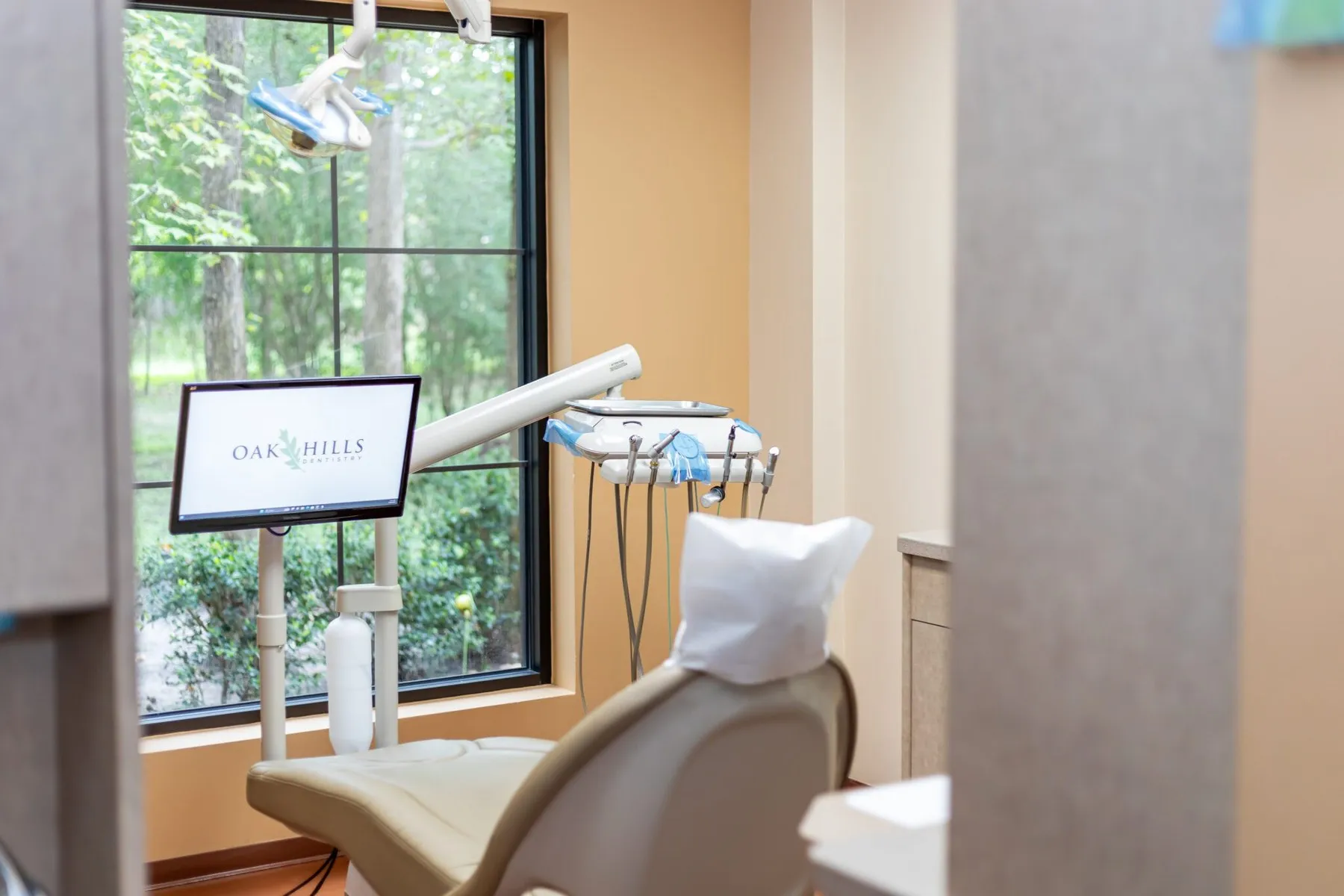
The practice
Where the work happens.

FAQ
Know before you visit.
Answers to your most common questions.
No. Both options offered here keep you awake and able to respond. Nitrous oxide makes you feel light and detached from what is happening; minimal oral sedation makes you drowsy and far less bothered by it. Neither is general anesthesia, which is a hospital or surgical-center service.
After nitrous oxide, yes. It clears within about five to ten minutes of breathing oxygen, with no lingering effect. After oral sedation, no. You will need a responsible adult to bring you and take you home, and you should not drive, work or make decisions for the rest of the day.
For appropriately screened patients, both nitrous oxide and minimal oral sedation have long safety records. Screening is the safety. We review your full medical history, current medications, allergies and past anesthetic experiences first, and we monitor you throughout. Some conditions and medication combinations make one or both options unsuitable: pregnancy, certain respiratory conditions and some sleep apnoea presentations among them.
With nitrous oxide, usually yes. With oral sedation, many patients remember little of it, which for some is the main appeal. Amnesia is a side effect, not the goal.
Coverage varies widely and often depends on the procedure it accompanies rather than the sedation itself. Nitrous oxide is sometimes covered for specific treatments; oral sedation frequently is not. We will check your plan and tell you the out-of-pocket figure before the appointment.
Start your smile journey.
Tell us how to reach you and we will call to talk through sedation dentistry, no commitment.